




You ask your kid what they did in science today, and all you get back is a shrug. The same child who once pried the remote apart just to see what was inside now says the word "science" like it's a synonym for homework.
That shift usually has nothing to do with science itself. It's the pressure stacked on top of it. Grades, tests, and "you need to know this" put a naturally curious brain on the defensive. Curiosity doesn't vanish, though. It goes hunting for a lower-stakes place to come back out and play. And one of the simplest ways to get a kid interested in science again is right at your own kitchen table, with a stack of cards where the screen usually sits.
😖 Pressure is curiosity's worst enemy
Decades of research into how kids learn keep circling the same idea: the motivation that comes from inside a child lasts far longer than anything you bolt on from the outside. When a kid feels controlled (do this, memorize that, get it right or else), that inner drive shrinks. Give them a real sense of autonomy, competence, and interest, and it grows.
Harvard's Center on the Developing Child puts the science-backed version in plain language: kids stay motivated when adults follow their lead, offer real choices, and praise effort instead of outcomes. Researchers at the Harvard Graduate School of Education make the same case for intrinsic motivation: curiosity feeds on autonomy and a bit of productive challenge, and it wilts under pressure.
🎲 The secret ingredient is low-stakes play
Play is where curiosity feels safe. No report card, no permanent record, and being wrong costs nothing. That safety is exactly what lets a kid take an intellectual risk: guess, miss, laugh, try again.
Family game night has become one of the most recommended parenting tools going around lately, partly as a deliberate break from screens. Child-development writers keep landing on the same advice: choose analog, screen-free games over app-based "edutainment," because the face-to-face version hands kids social and cognitive payoffs a tablet can't. A pack of cards makes kids look at each other, take turns, and think out loud. A tablet just makes them look down.
Science fits this format almost too well. It's packed with surprising, counterintuitive facts that are weirdly fun to argue about. You don't need a lab. You need a few good questions and a reason to keep score.
🧠 What quiz-style play is actually doing to the brain
Most families never clock this, but a light, competitive round of questions isn't only entertainment. It's one of the most effective learning techniques cognitive scientists have ever measured.
Start with the testing effect. When you pull a fact out of memory instead of re-reading it, you strengthen the path back to it and make it far easier to recall later. Researchers call this retrieval practice, and study after study shows it beats re-reading and highlighting for long-term retention. A trivia round is retrieval practice in a party hat. Every time your child reaches for an answer, they're doing the exact mental rep that makes learning stick — and it works best when the stakes are low and being wrong is fine.
The testing effect
Pulling a fact from memory strengthens the path back to it — quizzing beats re-reading for long-term recall.
Reasoning on your feet
Weighing two answers under a little time pressure exercises thinking, not just memory: rule out, estimate, guess.
Real social muscles
Turn-taking, listening to others' answers, waiting your turn — the everyday skills a tablet never works out.
It pulls a family closer
Shared knowledge, wild guesses, friendly competition — a kid who ties learning to warmth keeps coming back.
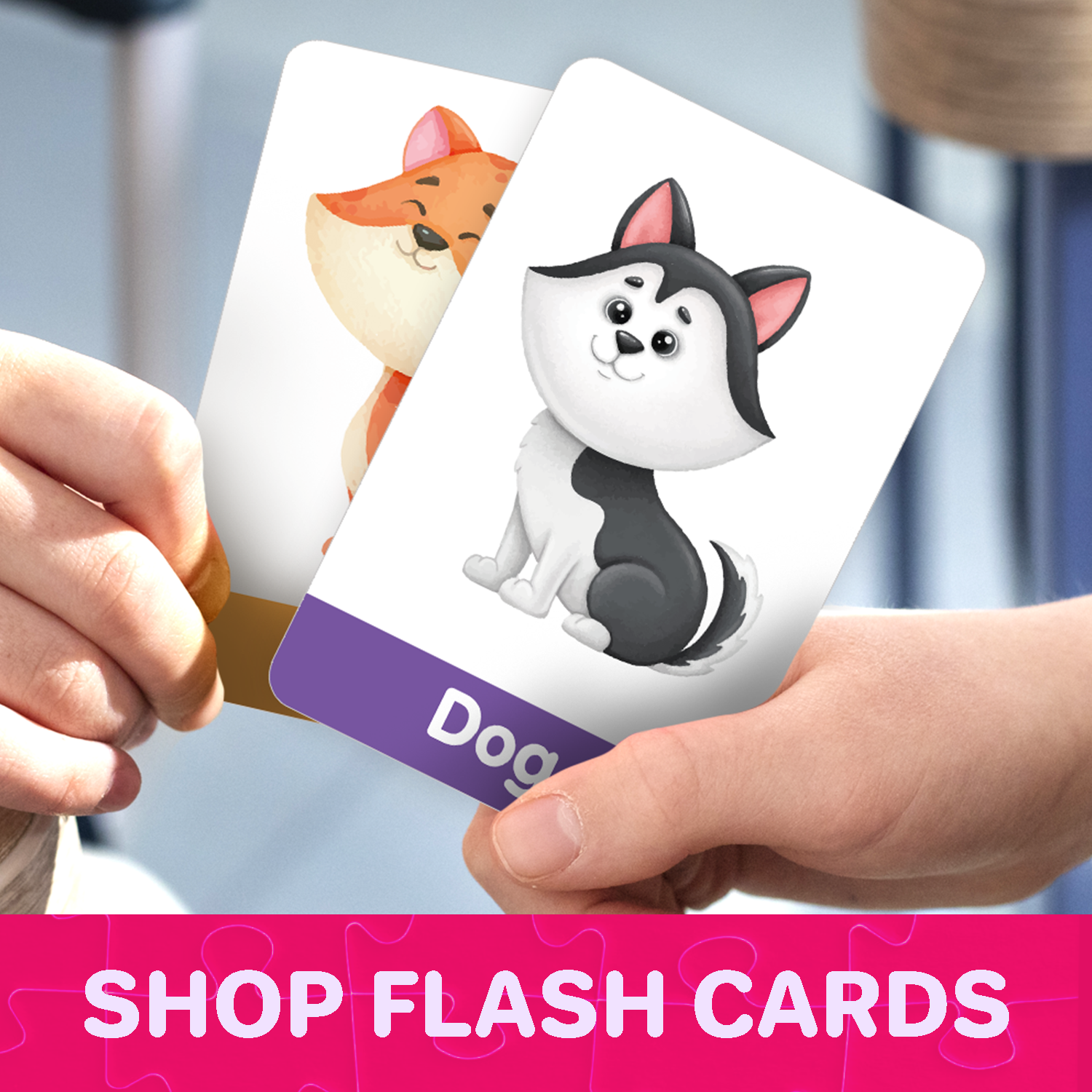
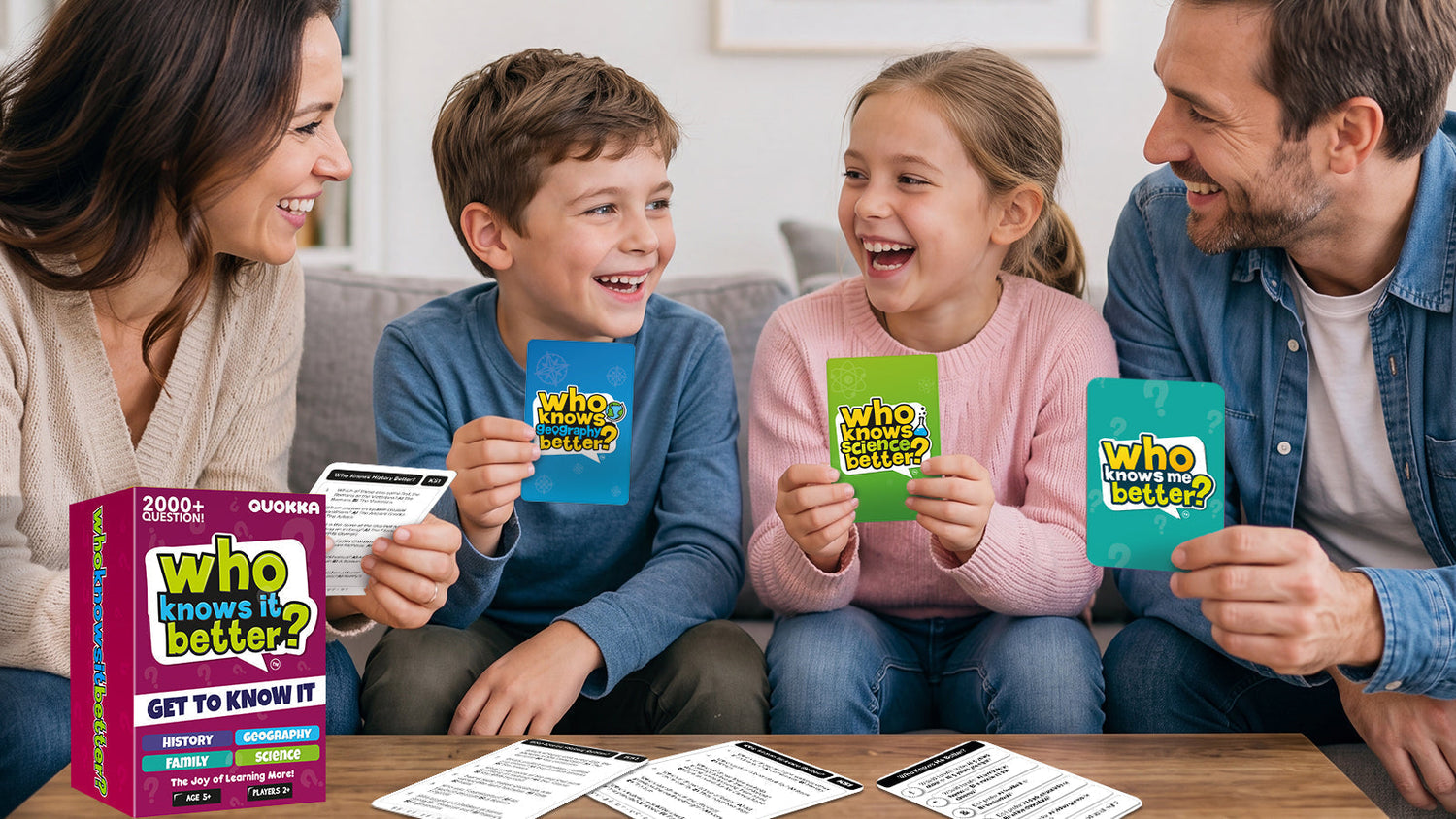
QUOKKA's "Who Knows It Better?"
A four-deck trivia set where the science decks sit right alongside the humanities — quietly signalling that curiosity isn't sorted into "smart" and "not-smart" subjects.
Players take turns answering fun, fact-based questions against a one-minute clock, and whoever racks up the most correct answers wins. Rounds are short, so nobody feels trapped — and the questions double as conversation starters.
Shop the 4-deck set →✋ Five ways to play so curiosity actually grows
The game is only half of it. How you play decides whether your child gets up from the table more curious or more self-conscious. A handful of small habits make the difference:
-
1
Cheer the good guess, not just the right answer.
A quick "I love how you worked that out" keeps being wrong cheap and keeps thinking valuable.
-
2
Let them follow the thread.
When a question sparks a "but why is that true?", pause the game and go chase it together. That tangent is the actual learning.
-
3
Be wrong on purpose sometimes — you included.
When a parent misses one and laughs it off, kids learn that not-knowing is just where knowing starts.
-
4
Ask "what do you think?" before you flip the card.
Open-ended questions invite real thinking with zero pressure to be right — one of the most consistent findings in the motivation research.
-
5
Stop while they still want more.
Ending on a high note is what has them asking to play again tomorrow.
🍎 Turn it into a back-to-school ritual
The start of the school year is a perfect moment to fold this in. While summer brains ease back into gear, ten minutes of trivia after dinner is a painless on-ramp: no worksheets, no nagging, just a standing invitation to be curious out loud. Make it a weekly fixture and you've pulled off something small but real. You've made "learning something new" a thing your family does together for fun — not something that only happens under pressure at school.
💬 Common questions from parents
What age is this good for?
How is a trivia game "educational" if it's just fun?
How long does a game take?
Hand curiosity a few good questions
Ten minutes after dinner, a stack of cards where the screen usually sits — that's all it takes to make learning something your family does for fun.
Get "Who Knows It Better?" →


Leave a comment
All comments are moderated before being published.
This site is protected by hCaptcha and the hCaptcha Privacy Policy and Terms of Service apply.