
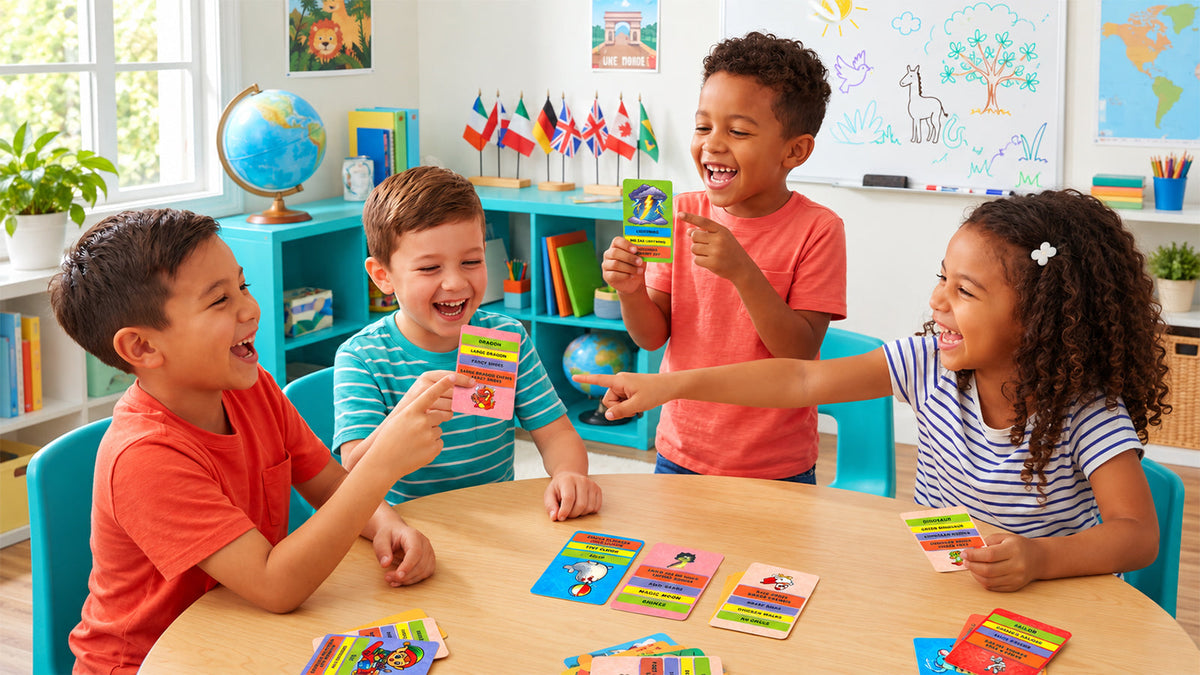
Every present says something about who you think the child is. They work that out before the paper is off.
Watch a seven-year-old work through a pile of presents and you’ll spot a sorting system running at about four seconds a box. One pile is for things that are theirs. The other is for things that are — in a way they couldn’t explain but have got exactly right — for their own good.
The second pile gets a polite thank-you. It goes upstairs. It does not come back down.
And the awkward part is that you bought the second pile on purpose. You stood in a shop, had a short argument with yourself, and the side that won was the one saying at least this one’s worth something. You weren’t wrong about the toy. You were just recognizable.
So what gives it away?
Not the subject. Kids will happily memorize the starting lineup of a football team, the evolution chart of ninety pocket monsters and the feeding habits of every shark in the Atlantic. All of that is hard. All of it is learning. Nobody had to sell it to them.
What gives a present away is the contract attached to it: a right answer, a grown-up who’ll be checking, and a purpose that belongs to somebody else. Children read all three in one glance — the beaming kid on the box, the promise about skills along the bottom, and you watching a little too closely while they open it.
Psychologists promised a group of nursery-school children a certificate for drawing — something they already loved doing. A week later, left to play freely, those children drew noticeably less than the kids who’d been promised nothing at all. Nothing about drawing had changed. Only the reason for doing it.
Kids don’t reject educational presents because they hate learning. They reject being handed a job.
None of which means play doesn’t teach. In 2022 researchers at the University of Cambridge pooled thirty-nine studies covering around 3,800 children aged three to eight. Guided play — an activity an adult gently steers while the child still gets to drive — was never worse than direct instruction, and on early math and shape knowledge it came out clearly ahead.
So the question at every age below isn’t how much learning is in the box. It’s whether they’ll pick it up when you’re not in the room.
“I can do it myself!”
This is the age of don’t help me mixed with a real appetite for cracking codes. Letters turn into sounds — except for a small gang of very common words (the, was, said, they, from) that flatly refuse to follow the rules, while carrying a huge share of everything your child will ever read.
520 Sight Words Flash Cards with Images & Sentences
- 520 cards
- 5 color levels
- Pre-K → grade 3
- Dolch & Fry lists
The words that can’t be sounded out — each one arriving with a picture and a real sentence instead of standing there alone. Color-coded into five levels, so you can hand over one level instead of a brick.
Psst — three minutes, not twenty. Two piles: “got it” and “not yet”. Never say a score out loud. The got-it pile getting taller is the only scoreboard a kid needs, and it’s theirs.
Writing already started? There’s a dry-erase edition with guided lines and binder rings covering the same five levels.
See the deckThe tracing kit — for the little sibling
- Ages 3–5
- 5 wipe-clean books
- Markers included
Lines and shapes, letters, numbers, drawing, first words — the pre-writing half of the job, on pages that wipe clean so nothing is ever ruined by a wobble. The markers matter more than they sound: this is a present a three-year-old can run without asking anyone.
See the kit“That’s not fair!”
Somewhere around five or six, children become lawyers. Fairness turns into a specialty, rules get quoted back at you, and a brand-new and very serious interest appears in being good at things.
Which means a present at this age carries more weight than it looks like it does. One that’s too easy says something. So does one they can’t manage.
What Would You Choose?
- 4 decks
- Ages 5+
- Set up in a minute
- Waterproof cards
Impossible dilemmas with no right answer anywhere in the box — which is exactly why a six-year-old will talk for two solid minutes defending one. There’s a pile of language development inside that argument and not one second of it feels like being taught.
Play it at dinner. Three cards, no scoring, no follow-up questions. If they say something surprising, don’t chase it — they’ll bring it back themselves.
See the gameThink. Feel. Tell. — Visual Memory Game
- 60 scenes
- 600 questions
- 30 seconds a round
Stare at a picture for half a minute, then answer ten questions about what was in it — and find out you noticed far less than you thought. The scenes are everyday situations kids recognize, and grown-ups lose at it regularly, which is the part that keeps it on the table.
See the game“I knew that one!”
This is when a child starts collecting facts on purpose and deploying them at dinner. Getting an answer right in front of the whole family beats any sticker a school can print.
Which raises an awkward question, because history, geography and science are the same subjects sitting in the homework folder. What decides which side of the line they land on isn’t the content — it’s the clock. A question you race to answer in a minute is a game. The exact same question with no timer and a grown-up marking it is a test.
Who Knows Better? — History, Geography & Science
- 4 decks
- Ages 5+
- 10-second sand timer
- Screen-free
Players take turns getting through as many questions as they can in one minute, most correct answers wins. Nobody marks anything, nobody keeps a record, and the round is over before anyone has time to feel bad about it. The timer does all the work.
See the 4-set“Don’t talk to me like I’m little”
The collecting, memorizing, statistics-quoting age, when a kid puts genuinely impressive effort into mastering something nobody assigned them. It’s also the age where a present becomes a statement about how old you think they are — and being read as younger than you are is, at ten, a real injury.
🎈 Higher or lower? Try three
say it out loud first, then tap →
1 Who has more bones — a newborn baby or a grown adult? peek!
The baby. Around 300 at birth against 206 in an adult — bones fuse as you grow, so growing up means losing about ninety of them.
2 Which came first — the telephone or the fax machine? peek!
The fax machine. Alexander Bain patented a device that sent pictures down a wire in 1843. The telephone turned up in 1876 — thirty-three years later.
3 Which is older — the Great Pyramid of Giza or the last woolly mammoths? peek!
The pyramid. It went up around 4,500 years ago, while a last group of mammoths was still wandering Wrangel Island about 4,000 years ago. The pyramids were already standing.
Higher or Lower
- 2,000+ questions
- Ages 10+
- History · Geography · Science · Universal
Will the next one be more, or less? You don’t have to know the answer — you have to reason your way to it. Make them say why before they commit and you’ve got a child arguing from evidence for fun. And losing to them happens often enough, and publicly enough, to count.
See the 4-setChallenge Game Set — for the kid who says they’re “not clever”
- 250 task cards
- 5 categories
- 3 difficulty levels
- Cups, balls & dice
Blindfolded attempts, silent missions, steady-hand tasks — with illustrations showing exactly what to do, so nobody has to read a rulebook out loud. This is the one present on the list a child can be brilliant at without being good at school. It’s also the one they’ll run themselves while you cook dinner.
See the set“I’d rather be upstairs”
A teenager’s expertise is real, current, and the one area where they outrank every adult in the house. The present that works is the one that puts that on the table instead of politely ignoring it.
Who Knows Music Better?
- 1,610 questions
- 4 decks
- Trivia · lyrics · sing-offs
- No phones
Nobody can revise for this one. The teenager owns the last few years; the adults own two decades nobody else was alive for. Being older is an advantage in one round and a liability in the next — which is the only arrangement a teenager accepts as fair.
Don’t make it an occasion. Leave it out during something else, and stop after fifteen minutes — especially if they want more.
See the 4-pack300 Questions on History Facts
- 300 questions
- Ages 13+
- Pocket-sized
- Road trips
Ancient stories, world culture and the genuinely strange end of history — the parts nobody teaches. It’s the rare history product a teenager picks up voluntarily, mostly because the facts are too good not to repeat to somebody else.
See the deckOne note on the four-deck sets: they earn their place as presents specifically. A single deck can run dry after a few weeks of heavy use, while a set is still in circulation months later. If you want the thing still being played at Easter, that’s the version to buy.
Four questions that predict the shelf
Ask these about the box in your hands before you pay for it.
-
Does it have right answers a grown-up checks?
The second an adult holds the answers, the activity becomes an assessment — and kids treat assessments the way the rest of us treat performance reviews.
-
Can they use it without you?
If it only works when an adult is free to run it, it gets played on the days you have energy. Which is not most days.
-
Is it labeled with a subject, or an activity?
“Vocabulary Builder” tells a child exactly which part of the school day has followed them home. The same work described as guess, argue, choose or remember reads completely differently — and is no easier.
-
Can they beat you, fairly?
Not be allowed to win. Beat you, in front of witnesses, in a game where you were trying. Kids can tell the difference instantly, and only one of the two is worth anything.
Fail three of the four and the present gets played once, out of love for you.
The whole thing on one page
- Ages 4–6Wants to do it alone. Give sight words with pictures. Skip anything you have to run.
- Ages 5–8Wants to be good at things. Give dilemmas and memory scenes. Skip anything a younger sibling has.
- Ages 7–10Wants to know things you don’t. Give timed trivia. Skip anything with no clock and a marker.
- Ages 9–12Wants to be taken seriously. Give reasoning games and challenges. Skip cartoon packaging.
- Ages 13+Wants their taste to count. Give music and strange history. Skip anything needing public enthusiasm.
- No idea of the age?Something with no prerequisites — a guessing game explainable in under a minute.
Three tricky situations
Buying for a child you barely know
Change the question you ask their parent. Not what do they need help with — that leads straight to the shelf of unopened boxes. Ask what they already do. A kid who argues about fairness gets a choice game; a kid who collects facts gets trivia. You’re not adding an interest, you’re buying a better version of one that’s already there.
Buying for two siblings at once
Two separate presents of unequal size is a problem you’ve made for yourself. One game they play together, plus one small thing each, works far better. With a big age gap, handicap the game rather than the child: younger players get two guesses, older players have to explain their reasoning out loud. It’s a real disadvantage, it’s better for them anyway, and nobody’s been publicly labeled the baby.
Buying for a child who has everything
They don’t have anything that needs another person. Almost every present a modern child gets can be used alone — which is why the pile keeps growing and the interest doesn’t. A game is the rare thing that gets better when somebody else walks into the room.
Questions parents actually ask
What’s the best present for a five-year-old learning to read?
What do you give a nine-year-old who has everything?
What can I give a teenager that won’t be ignored?
Are educational presents worth giving at all?
What’s safe when I’m not sure of the age?
Give the one they’ll pick up on their own
Card games and flashcard sets built to be played, argued over, and asked for again — by age, and without a worksheet in sight.
Browse all games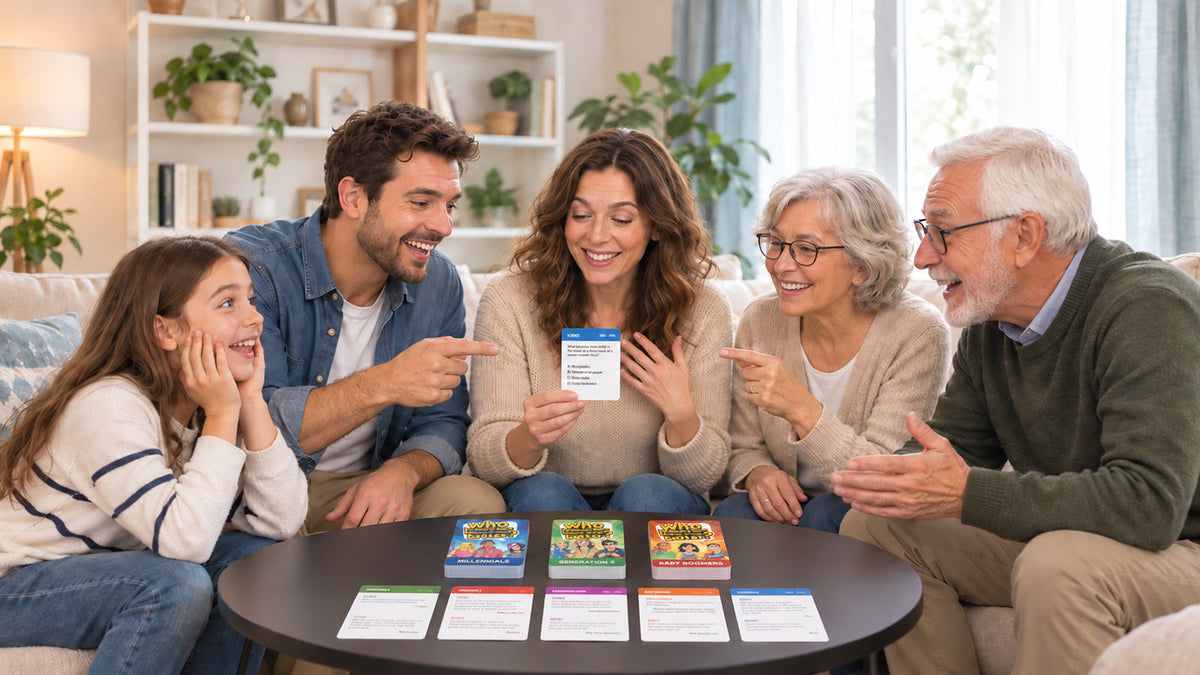

Leave a comment
All comments are moderated before being published.
This site is protected by hCaptcha and the hCaptcha Privacy Policy and Terms of Service apply.