
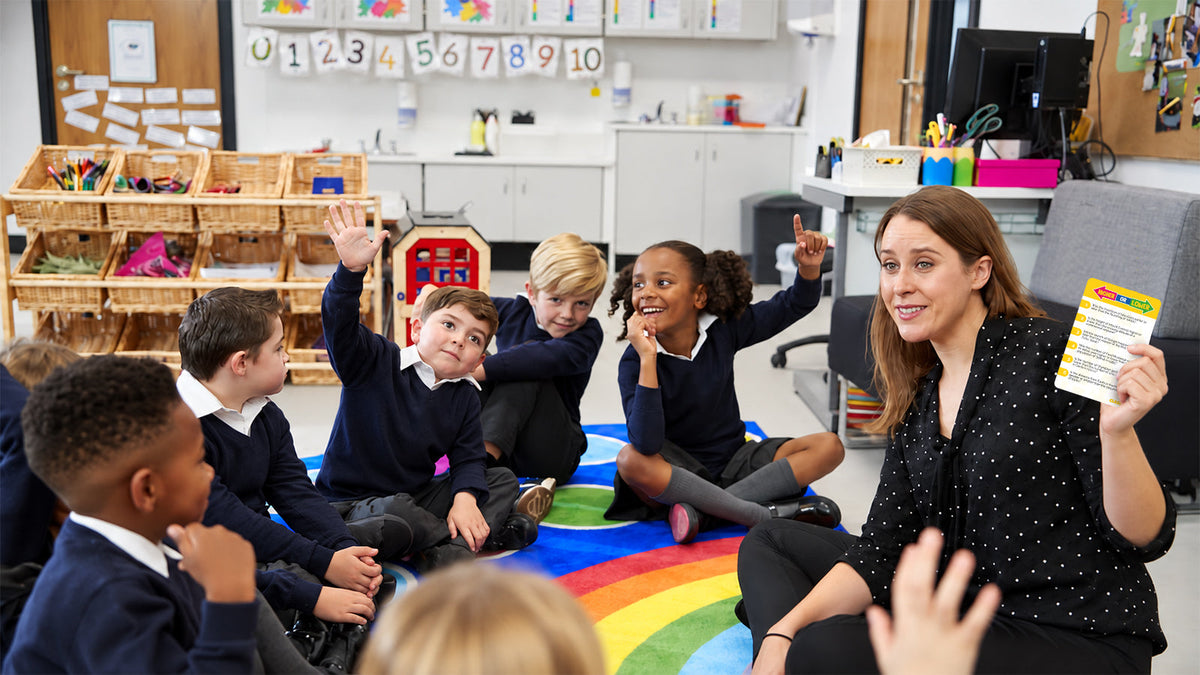
A week after studying a short passage, college students who had simply reread it remembered 40 percent of it. Students who had quizzed themselves remembered 61 percent. That was the result of a 2006 study at Washington University in St. Louis, and the gap is even stranger than it looks: the re-readers had gone through the text about 14 times, while the quizzers had read it about three.
Roediger & Karpicke, Washington University in St. Louis, 2006
That’s the best argument for classroom games. A good game is a quiz that doesn’t feel like one. Kids pull answers out of their heads again and again, and they’re having too much fun to notice they’re studying. Many of the games teachers rely on also come with great stories, from a spy novel to an ox at a country fair. Here are ten, with the story to tell your class and the cards to play each one with.
Classroom games where everyone answers at once
In most class discussions, the same few hands go up. These three games get an answer out of every kid in the room at the same time.
1. This or That
Common Core writing standards ask first graders to state an opinion and give a reason for it. A would-you-rather question is that same skill out loud, minus the pencil.
What Would You Choose? Kids & Family holds 500 funny, silly and sometimes tricky dilemmas on 95 waterproof cards, for ages 5 and up, and none of them has a wrong answer. Read a question and point to two opposite walls, one for each choice. Kids walk to their side, and then a volunteer from each side tries to talk the other side into switching.
2. Higher or Lower
In 1906, the scientist Francis Galton came across a contest at a livestock fair in Plymouth, England: visitors were guessing the weight of an ox. Galton collected 787 of their guesses and lined them up. The middle guess was 1,207 pounds. The ox weighed 1,198.
Your class can test the same idea, which we now call the wisdom of crowds. In Higher or Lower, players answer a quiz question and guess whether the answer is higher or lower than the one before. The deck has more than 500 questions for ages 8 and up. Read a question and have everyone vote at once, thumbs up for higher and thumbs down for lower. Then check whether the class majority beats your best individual guesser. Our money’s on the majority.
3. Stand Up for True
Psychologists have noticed something odd about mistakes: the ones we’re surest of are the ones we’re most likely to fix. When people who confidently gave a wrong answer see the right one, the correction tends to stick. Researchers call it the hypercorrection effect, and they’ve seen it in children too.
That makes true-or-false questions more useful than they look. The Trivia Card Game for Kids set has four decks, World, Space, History and Human Body, and each mixes 50 question cards with 50 true-or-false cards. Read a statement, and kids stand up for true or stay seated for false. Make everyone commit before you reveal the answer. The kids who were surest of the wrong one are often the ones most likely to remember the right one.
Classroom games that get kids out of their seats
Sitting still is hard work at seven. These games put the wiggles to use.
4. Charades
Charades started out on paper. In 18th-century France, a charade was a written riddle that hinted at a word one syllable at a time. Acting the clues out came later, in 19th-century drawing rooms. In Vanity Fair, Becky Sharp acts her way into high society, and in Jane Eyre, Mr. Rochester’s houseguests stage charades of their own.
Your students can skip the ball gowns. Express & Guess Charades for Kids puts the game on the clock: players act out or explain funny words and phrases before the 60-second timer runs out, and a chaos die adds surprise challenges. There are 200 cards in the box.
For younger grades, Charades for Kids (ages 4–8) has 200 act-it-out tasks on 50 illustrated cards, with twists like slow motion or acting on one leg. Split the room into two teams, and let the waiting team keep time.
5. Brain Break Cards
In 2006, researchers at East Carolina University tried 10-minute activity breaks, done right beside the desks, with third and fourth graders. After a break, students’ on-task behavior rose about 8 percent. For the kids who usually had the hardest time focusing, it rose about 20 percent.
Active Movement Game for Kids makes those breaks easy to run. Its 50 animal-themed exercise cards get kids hopping, balancing, crawling and jumping, and it’s made for ages 4 to 8. Keep the deck by the board, pull a card when the room gets restless and have everyone do the move beside their desk.
6. Letter Hunt
Scavenger hunts became a grown-up party craze in the early 1930s, when the society hostess Elsa Maxwell started throwing exclusive scavenger hunt parties in New York.
Your class doesn’t need Manhattan, just the classroom. The Scavenger Hunt Game: Adjectives & Letters has 50 cards with clues like “find something shiny that starts with letter L,” so kids practice letter sounds and describing words while they search. Give each pair a card and two minutes, then let the class judge whether each find fits both halves of the clue.
Games that sharpen memory and reasoning
These three train the habits every subject needs: noticing details, reasoning from clues and recalling facts fast.
7. Look and Remember
In Rudyard Kipling’s 1901 novel Kim, a teenage boy in training to be a spy is shown a copper tray scattered with jewels. Once the tray is covered, he has to describe everything on it. The exercise became known as Kim’s Game, and Scouts have played it for more than a century.
The Think Feel Tell Visual Memory Game is Kim’s Game with a picture instead of a tray. Kids study a colorful everyday scene for 30 seconds, then answer questions about what they saw. There are 60 scenes with 10 questions each, 600 in all. Put a card under the document camera, switch it off after 30 seconds and read the questions aloud. Kids write their answers on whiteboards and hold them up together.
8. Mystery Clue Cards
“The grand thing is to be able to reason backwards,” Sherlock Holmes says in A Study in Scarlet, the 1887 novel that introduced him. A good guessing game asks for exactly that: start from the clues and work back to the answer.
Each Who Guess It Better card gives clues about a mystery state, country or animal, plus quick facts to share once someone cracks it. The USA States deck has 50 cards, and the Animals & Countries set bundles three decks of 50. Read the clues one at a time and let teams guess after each one. The fewer clues a team needs, the more points it scores.
9. Around the World
Remember the students who quizzed themselves and remembered more a week later? Flash cards work the same way, and Around the World turns them into a race. One student stands beside a classmate’s desk, and you flash a card. Whoever answers first moves on to the next desk. The student who gets farthest around the room wins.
For math, Math Multipack Flash Cards for grades 1–3 cover addition, subtraction, multiplication and division, with answers on the back of the multiplication and division cards. For reading, the 520 Sight Words Flash Cards come in five color-coded levels from Pre-K through 3rd grade. If sight words still aren’t sticking, here’s why the word wall isn’t making sight words stick.
And one for rainy days
10. Indoor Recess Bin
The American Academy of Pediatrics considers recess essential to a child’s development and says schools shouldn’t take it away as punishment or to make room for lessons. Rain doesn’t change that. It just moves recess indoors, where it goes best when kids can grab a game and play on their own.
6 Pack Original Card Games puts Crazy 8, Go Fish, Old Maid, War, Slap Jack and Memory Match in six small boxes, for 2 to 6 players ages 4 to 8. War is pure luck, which is exactly why the youngest player can beat the oldest.
Don’t BEE Last Global Edition uses colors and shapes instead of words, so kids who are still learning to read, or still learning English, can play too, and the rules take about a minute to learn. Teach each game to one small group, and those kids become the experts who teach everyone else.
Start with one
You don’t need all ten. Pick one, teach it once and keep the box in your desk drawer. If a colleague wonders why your students are playing cards, send them the educational value of card games. And when kids ask who invented games in the first place, the history of board games makes a ready-made lesson.
Within a week, your class will be asking for its game by name. Just don’t tell them it’s a quiz.
Questions teachers ask
What are some fun games to play in the classroom?
What games can you play with a whole class?
Why do classroom games help kids learn?
Learning games for every class
Trivia decks, flash cards and classroom games, all in one place.
Browse learning games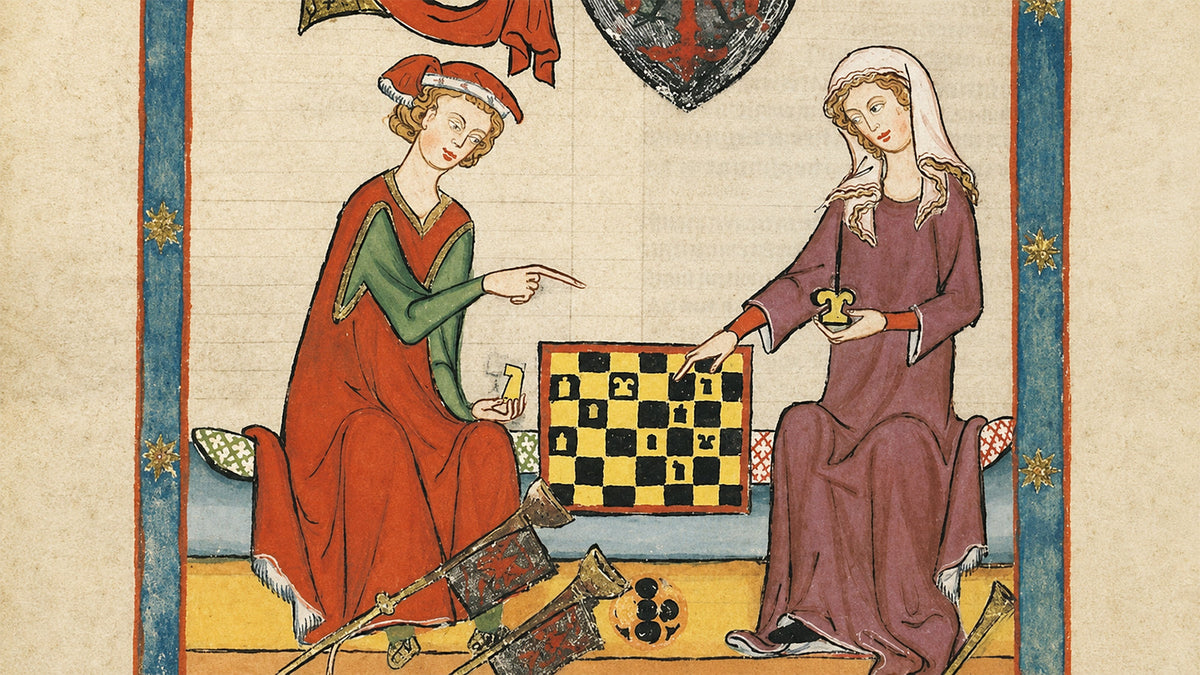

Leave a comment
This site is protected by hCaptcha and the hCaptcha Privacy Policy and Terms of Service apply.